Ever worry your message sounds rude?
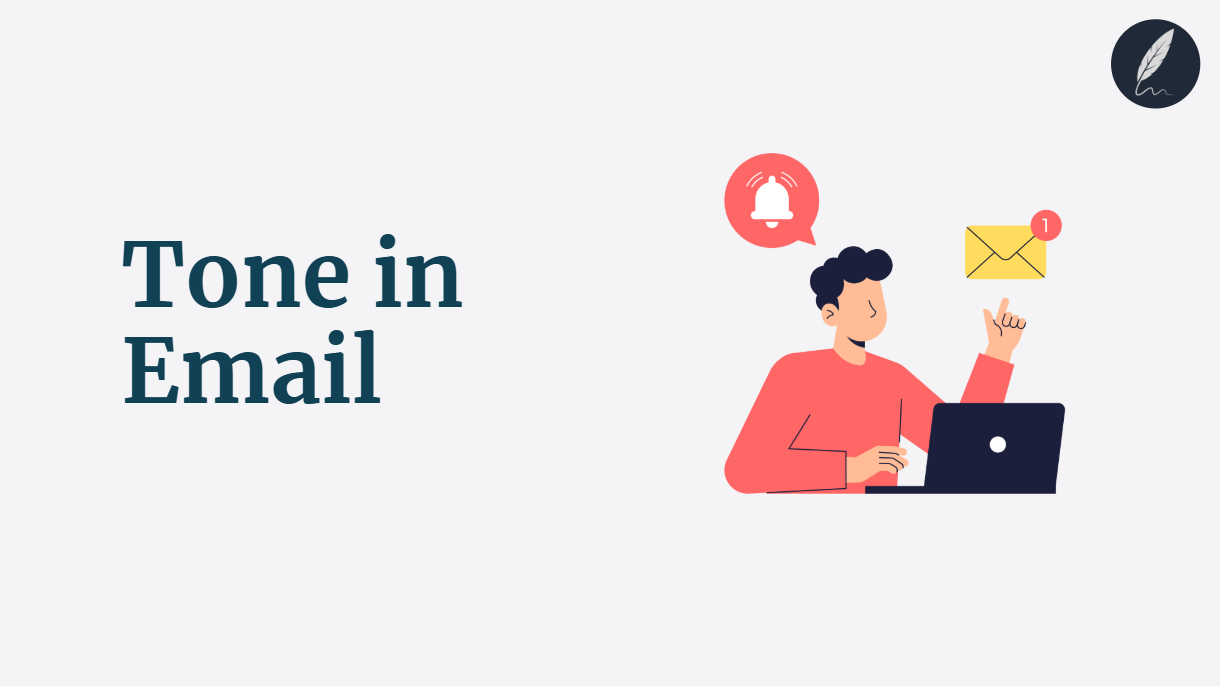
Email tone defines the attitude behind your words, but text often hides your intent. Striking the right professional tone prevents miscommunication and builds stronger business relationships.
Discover the strategies to master your digital voice and ensure every message lands perfectly.
Key Takeaways
- Understand The Basics: Tone is how you say it, not just what you say.
- Bridge The Gap: Senders frequently misjudge how recipients interpret sarcasm or seriousness.
- Master The Levers: Diction, punctuation, and sentence structure shape the email’s emotional temperature.
- Choose Your Style: Navigate formal, casual, and assertive tones to match any context.
- Leverage Technology: Use AI emotion estimates as prompts to review wording in context before sending.
Struggling with Clarity in your writing?
You're not alone. Many writers face this exact challenge.
Orwellix provides you with advanced writing tools specifically designed to overcome common writing hurdles. Our AI-powered platform helps you craft clearer, more engaging content with less effort.
Start Free TrialWhat is “Tone” in Email?
In the realm of digital communication, email tone is defined as the emotional quality, attitude, or “voice” that permeates your written message. While face-to-face interactions rely heavily on non-verbal cues like facial expressions and vocal inflection, text-based communication strips these away. Consequently, tone is not determined by what you say, but rather by how you say it. Eliminating business clichés is one of the fastest ways to improve how your emails land.
We often encourage writers to think of tone as the “temperature” of an email. A message can be warm, empathetic, and inviting, or it can feel cold, distant, and strictly transactional. Striking the right professional tone essentially means adjusting this thermostat to suit the context, ensuring your message lands exactly as intended.
Achieving this balance is harder than it looks. A landmark study by Justin Kruger and Nicholas Epley confirms that senders suffer from “egocentric bias.” We hear our own sarcasm or seriousness clearly while typing. This causes us to overestimate how well the recipient will interpret our intent.
The consequences of this disconnect are significant. Recent data highlights that 90% of employees report email has led to miscommunications at work. With 86% of professionals preferring email for business correspondence according to the same report, the margin for error is slim, and avoiding business email writing mistakes becomes a practical clarity habit, not just etiquette.
- The Confidence Gap: Research suggests our ability to interpret tone in email is often no better than a coin flip (50%), despite our confidence levels hovering near 90%.
- Negativity Bias: Without clear emotional markers, neutral statements (e.g., “We need to talk”) are often interpreted negatively by anxious recipients.
- Trust Erosion: Consistently unclear or accidentally aggressive tone can slowly dismantle professional trust, making business email etiquette vital for team cohesion.
The 3 Core Elements That Contribute to Tone
The specific “vibe” of an email isn’t magic, it is engineered through three distinct mechanical levers. By identifying and adjusting these elements, you gain precise control over how your message is perceived.
1. Word Choice (Diction)
Your vocabulary sets the baseline frequency of your message. Professional tone often hinges on the subtle difference between “negative” and “constructive” phrasing. For instance, telling a client “You made errors” triggers defensiveness, whereas suggesting “There are areas for improvement” invites collaboration.
Similarly, favoring active voice (“I will handle this”) over passive voice (“This will be handled”) projects confidence and accountability rather than bureaucratic distance.
2. Punctuation
Punctuation acts as the “body language” of digital text. Misusing it is one of the fastest ways to accidentally erode business email etiquette.
- The “Period is Pissed” Phenomenon: Punctuation psychology is high-stakes. Research by Science Direct (2025) confirms that including a period at the end of short messages (1-4 words) communicates insincerity or negativity. However, this negative effect disappears in longer, sentence-like messages.
- The Exclamation Point Dilemma: While often feared in formal contexts, a study referenced in Harvard Business Review reveals that exclamation points consistently increase perceptions of warmth and friendliness without reducing perceived competence.
3. Sentence Length and Structure
The rhythm of your sentences dictates the pacing and “temper” of the email. While brevity is often praised, it carries hidden risks.
- Short Sentences (Under 10 words): Create a punchy, assertive rhythm excellent for Calls to Action. However, they can feel abrupt or aggressive if overused.
- Longer Sentences: Signal thoroughness and diplomacy. Data suggests that longer messages are generally viewed more positively than ultra-brief ones, which are often mistaken for a lack of effort or coldness.
The 4 Main Types of Email Tone
Navigating email tone is not about finding one “perfect” voice, but rather selecting the right tool for the job. Most business communications fall into four distinct categories, each with its own utility and risk profile.
1. The Formal Tone
Formal tone is the suit-and-tie of business email etiquette. It is characterized by complete sentences, standard capitalization, and respectful salutations (e.g., “Dear Ms. Smith”). This style is non-negotiable for initial outreach, legal correspondence, and C-suite communications.
Why it matters: Precision here is critical. According to Adobe’s 2024 Email Usage Study cited in MetaIntro’s guide, 64% of hiring managers have rejected candidates solely due to poor email etiquette. In high-stakes environments, a lack of formality is often mistaken for a lack of competence.
2. The Casual / Conversational Tone
As workplaces modernize, the “business casual” voice has become the default for internal teams and long-term client relationships. This tone prioritizes brevity and connection over rigid structure, often utilizing contractions (“I’ll” vs “I will”) and occasionally appropriate emojis.
However, a generational divide exists here which requires careful calibration:
- The Gen Z Approach: Tends to prioritize “solidarity” and equality, using informal markers like “Hey [Name]” to build rapport.
- The Traditional Approach: Older generations often prioritize “respect” markers like titles and formal greetings.
- The Insight: Research from Psychology Today suggests that shifting from formal to casual too quickly with senior stakeholders can be perceived as presumptuous.
3. The Assertive Tone
Often confused with aggression, assertive tone is the sweet spot of professional efficacy. It is direct, confident, and solution-oriented without being emotional. An assertive email states needs clearly (e.g., “I need the report by Friday at 5 PM”) rather than hinting at them.
The ROI of Clarity: Assertiveness builds trust. A 2024 Salesforce study revealed that 68% of clients cite communication quality as a primary factor in vendor retention. Clients and colleagues prefer directness because it eliminates the mental load of decoding ambiguous messages.
4. The Aggressive Tone (The Danger Zone)
This is rarely intentional but highly destructive. Aggressive tone manifests through accusatory language (“You failed to…”), demand-heavy phrasing, or the dreaded passive-aggressive sign-off. For guidance on how to close emails professionally, see our guide on how to end a professional email.
- The Passive-Aggressive Trap: A recent Mailsuite study found that over 80% of passive-aggressive emails originate from co-workers, not bosses.
- The Cost of Rudeness: It isn’t just annoying, it hurts the bottom line. Research from UC Irvine shows that exposure to rude email tone significantly lowers an employee’s task performance and morale.
The Psychology of Analysis Tone in Remote Work
In a physical office, a smile or a nod softens a blunt request. Remote work removes these buffers, leaving words to stand starkly on their own. This digital isolation amplifies the psychological weight of every email, turning subtle tonal slips into major stressors.
The Anxiety of Ambiguity
Contrary to the popular belief that we always misread text negatively, recent research suggests the real enemy is ambiguity. A 2024 study on remote work stressors found that lack of clarity doesn’t just confuse, it actively threatens “relatedness satisfaction”, our sense of belonging with colleagues. When senders are vague, receivers are left decoding the silence, leading to cognitive fatigue.
- The Mental Health Toll: The stakes are higher than just awkwardness. A 2025 study published in the International Journal of Science and Research Archive linked remote work challenges to a 15% rise in Generalized Anxiety Disorder (GAD-7) scores and a 10% increase in depression scores among employees.
- The Trust Deficit: Without consistent tonal markers, “psychological safety” erodes. Employees stop assuming positive intent and start protecting themselves against perceived slights, making professional tone a key safeguard for mental health.
To combat this, effective remote teams practice over-communication of intent. This means using more words to be explicitly kind, explicitly clear, and explicitly supportive, rather than relying on the reader to “guess” the vibe.
8 Tips for Achieving the Right Professional Tone
Mastering email tone requires more than just good grammar, it demands emotional intelligence and strategic foresight.
Here are eight actionable strategies to help you consistently strike the right note.
- Know Your Audience: Context is everything. A GIF that delights a peer might alienate a board member. Always calibrate your formality level based on the recipient’s position and your existing relationship history.
- Lead with Empathy: Before diving into logistics, acknowledge the human on the other side. A simple “I hope your week is off to a good start” acts as a tonal primer, signaling goodwill before you make a request.
- Read Aloud: Your ear can catch what your eye misses. Reading your draft out loud helps identify accidental harshness or choppy rhythms that might be interpreted as aggression.
- Use Emojis Strategically: While once considered unprofessional, emojis are becoming functional tone markers. Data indicates that using a well-placed emoji can improve perceived friendliness without compromising competence, provided they match industry norms.
- Soften Your “Asks”: Imperatives like “Send me the file” read as demands. Soften them with modal verbs: “Could you send the file?” transforms an order into a respectful request.
- Avoid “Urgent” Inflation: False urgency burns teams out. A study highlighted in Harvard Business Review notes that non-urgent emails sent after hours are consistently overestimated as “urgent” by recipients. Use subject line tags like [Not Urgent] to protect mental bandwidth.
- Rethink the “Sandwich” Method: The conventional wisdom of “praise-critique-praise” often fails. A 2025 Gallup analysis cited by Forbes found that only 14% of employees felt such feedback inspired improvement. Instead, clear, direct, and strengths-based feedback is more effective.
- The 24-Hour Rule: Never send an email when angry. If a message triggers an emotional reaction, draft your reply and wait 24 hours. You will almost always rewrite it with a more professional tone the next day.
Using the Orwellix Tone Detector
An automated tone check can prompt you to reread wording you might otherwise overlook. Your knowledge of the recipient, the situation, and the earlier conversation still matters when deciding how to phrase a message.
Emotion labels, formality, and politeness are different kinds of feedback. A model score is an estimate of an emotion category, not proof of how someone will react to your email. For a wider writing workflow, see our guide to the best AI writing assistant for professionals.
For email-specific grammar and tone correction, the guide to the best grammar checker for business emails covers which tools fix both problems in a single pass. If you run a small business and write every customer email yourself, compare the best writing tool for small business owners for the wider workflow view.
The Orwellix Tone Detector uses an English-language model with 28 categories, including curiosity, annoyance, gratitude, and neutral. It displays up to three labels for the whole text and individual sentences. It does not return “balanced” or “professional” ratings. Use this workflow to combine those estimates with your own review:
- Draft Naturally: Write your email without self-editing for tone initially. Focus on getting the facts down.
- Analyze: Paste an English draft or passage of up to 2,000 characters into the Tone Detector and click “Analyze Tone.”
- Review the Estimates: Compare the overall and sentence-level labels with what you meant to convey. A higher model score is not a pass mark or a guarantee that a label is correct.
- Refine in Context: If a request reads too abruptly, make the action clearer or adjust the wording, such as “Could you send the file?” Reread the revised email for the recipient and purpose rather than editing toward a particular label.

Write smarter with Orwellix
The Orwellix AI Capabilities that helps you craft clearer, more effective content.
Conclusion
Mastering email tone is no longer a soft skill, it is a strategic business asset. What begins as a simple choice of words or punctuation ultimately shapes professional reputation, team cohesion, and client trust. Throughout this guide, we explored the three mechanical levers of tone, diction, punctuation, structure and how they define the spectrum from formal to casual.
We also examined how ambiguity can complicate communication in remote teams. For another cue when reviewing a draft, try the Orwellix Tone Detector. Consider its emotion estimates alongside the recipient, purpose, and surrounding conversation. Clear requests and relevant context matter more than achieving a particular model label.
Frequently Asked Questions (FAQs)
1. How can I tell the difference between an assertive and an aggressive tone?
Assertiveness focuses on the work and clear needs (e.g., “I need the report by 5 PM”), while aggression often attacks the person or implies blame (e.g., “You decided to be late again”). Assertive tone is objective and confident, aggressive tone is emotional and demanding.
2. Is it ever unprofessional to use emojis in work emails?
It depends on the context and your relationship with the recipient. While emojis can clarify intent and add warmth in casual internal emails, avoid them in formal correspondence, legal matters, or initial outreach to senior leadership to maintain professional credibility.
3. If I shouldn’t use the “sandwich method,” how do I deliver constructive criticism politely?
Focus on being direct, clear, and strengths-based. State the issue objectively without “fluff,” explain the impact, and offer a specific path for improvement. Research shows this approach builds more trust than hiding criticism between layers of potential insincerity.
4. What should I do if a client misinterprets my email tone as rude?
Switch channels immediately. Do not try to explain yourself via another email, which may escalate the confusion. Pick up the phone or schedule a video call to apologize for the misunderstanding (not the intent) and let your vocal tone re-establish the relationship.
5. Can AI tools really understand human nuance and sarcasm in emails?
AI can miss sarcasm, humor, and meanings that depend on a shared conversation. The Orwellix Tone Detector provides emotion estimates to help you review a draft; it does not establish how a particular recipient will interpret it. Read nuanced messages in context and use human feedback when it would help.
Try Orwellix Free for 7 Days
Experience Orwellix AI Agent's capabilites with risk-free trial. Full access to all features for 7 days. Credit card required to start, you won't be charged until the trial ends.
Start Your Free Trial