Are you struggling to turn blog readers into buyers?
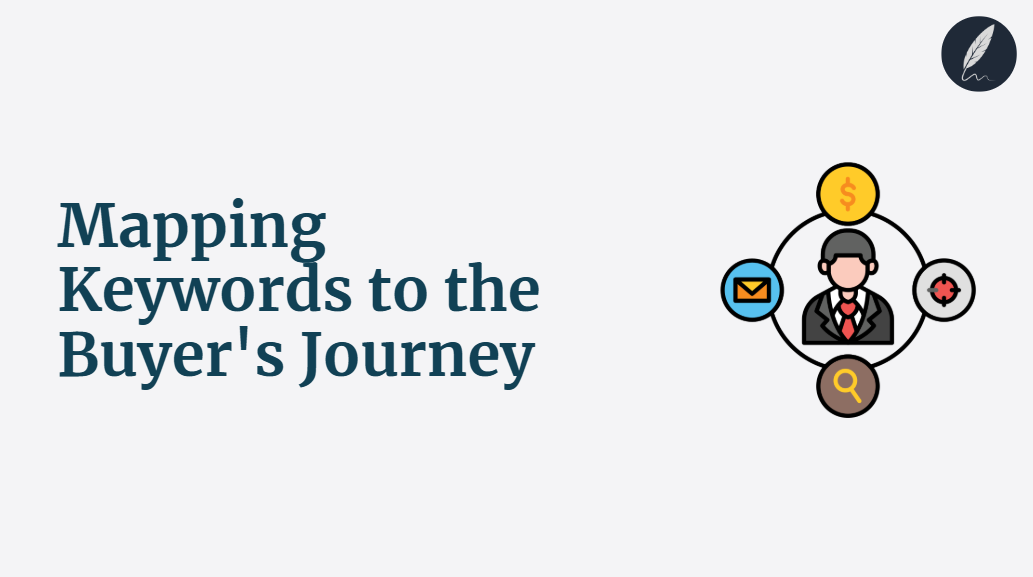
Mapping keywords to the buyer journey fixes this problem quickly. You stop guessing and start building true buyer momentum. By matching user search intent, you easily guide them toward buying.
Learn how to sequence your SEO content funnel today!
Key Takeaways
- Stop Traffic Chasing: Focus on guiding visitors closer to their final purchase instead of just inflating random page views.
- Fix Intent Dead Ends: Always provide a clear, logical next step for your reader to prevent immediate website bounces.
- Bridge Content Gaps: Connect broad educational articles directly to specific product comparisons using smart internal links.
- Group Keywords Smartly: Categorize search terms by awareness, consideration, and decision phases to match exactly what buyers need.
- Automate Keyword Maps: Use an AI writing tool to instantly discover stage-appropriate phrases and speed up your research process.
Struggling with Clarity in your writing?
You're not alone. Many writers face this exact challenge.
Orwellix provides you with advanced writing tools specifically designed to overcome common writing hurdles. Our AI-powered platform helps you craft clearer, more engaging content with less effort.
Start Free Trial”Stop Writing for Traffic. Start Writing for Movement.”
The “Traffic-First” Trap
Most content teams make one critical mistake: they publish almost entirely for top-of-funnel awareness while neglecting middle and bottom-of-funnel content. This approach might inflate your analytics dashboard, but it rarely drives targeted revenue.
Mapping keywords efficiently across the buyer journey stages is not just about ranking for high-volume terms, it is about building a proactive momentum system. When you focus solely on informational vs transactional keywords without a clear funnel-stage content strategy, you attract visitors who consume your content and immediately leave.
From Static Labels to Buyer Momentum
Many competitors treat keyword mapping as a static labeling exercise, functioning like a simple spreadsheet that checks off top of funnel keywords (ToFu). However, modern SEO requires framing this process as continuous buyer momentum.
A staggering industry report from the Content Marketing Institute notes that while most marketers invest heavily in content creation, far fewer actively align that content to guide buyers toward the later stages. Writing for movement means every piece of content actively pushes the reader toward a specific purchasing decision.
The Danger of “Intent Dead Ends”
When you fail to align your search intent with the user’s natural progression, you inevitably create “Intent Dead Ends.”
This scenario happens when a page answers a query flawlessly but offers no logical, keyword-driven next step. Here is what an Intent Dead End looks like compared to a movement-driven approach:
- The Dead End Trap: A user searches for “marketing automation tips,” reads your comprehensive guide, and finds no internal links or contextual CTAs guiding them to software options. They permanently bounce.
- The Momentum Approach: The exact same user reads your top-of-funnel guide, but naturally encounters embedded links targeting middle of funnel keywords (MoFu) like “marketing automation software comparison.”
- The Conversion Impact: Providing that immediate, highly relevant next step captures the user’s growing purchase intent rather than sending them back to the search results.
Evolving the Reader’s Psychological State
The transition must match the evolved psychological state of the reader perfectly. Once they fully understand their initial problem, their next immediate thought naturally centers on evaluating available solutions. If your content architecture does not anticipate this shift, you lose the prospect to a smarter competitor who mapped their content gap by funnel stage effectively.
The Ultimate Fix: Proactive Content Mapping
While scannable bullet points help identify these Intent Dead Ends quickly, fixing the underlying mechanism requires a deeper shift in your content operations. You cannot simply drop random links into an article and expect conversions.
The ultimate structural fix is to deploy proactive content mapping SEO techniques across your entire site. This ensures that every URL earns targeted organic traffic while simultaneously moving the prospect forward in their journey.
Once you know the stage and question an asset serves, the next step is to match it to a distribution channel with a defined job rather than sending every asset through the same promotion sequence.
In fact, comprehensive research published by Forrester demonstrates that guiding buyers through a structured path with relevant, stage-appropriate information can drastically shorten the B2B sales cycle. By carefully transitioning users through awareness consideration decision, you transform your website from a passive informational encyclopedia into an active, high-converting revenue engine.
The Keyword Architecture: Stage-by-Stage Breakdown
Building a high-converting SEO content funnel requires precise alignment between the user’s search query and their psychological state. You cannot effectively guide a prospect without mapping out the exact keywords they use at each step.
Stage 1: Awareness (Top of Funnel)
At the top of funnel keywords (ToFu) stage, the buyer is experiencing a problem but lacks the specific industry vocabulary to solve it. Their mindset is purely informational, focusing on broad educational value rather than software pitches.
According to comprehensive data from Semrush, informational queries make up approximately 80% of all search volume online. Capturing this massive audience is only valuable if you deploy specific keyword modifiers by stage to filter for relevant intent.
- Stage Objectives: Earn trust, define the core problem, and casually introduce your brand’s methodology.
- Keyword Modifiers: “how to,” “what is,” “guide,” “tips,” “examples.”
- Content Format: Informational blog posts, ultimate guides, and core theory breakdowns.
- Keyword Match Example: Weak: “What is SEO” (too broad). Strong: “How to map keywords for SaaS content.”
- SaaS Execution: A prospect searching “how to write clearer emails” naturally discovering actionable problem-solving tips.
Stage 2: Consideration (Middle of Funnel)
Once the problem is fully defined, buyers transition into evaluating solutions using middle of funnel keywords (MoFu). They are actively comparing methodologies, workflows, and specific software options to find the best fit.
Research published by Demand Gen Report highlights that 60% of buyers rely heavily on peer reviews and comparison content during the consideration phase. This is where commercial intent keywords become your most powerful asset for capturing active shoppers.
- Stage Objectives: Position your product as the superior choice by highlighting unique differentiators.
- Keyword Modifiers: “best,” “vs,” “alternative,” “tools,” “software,” “review.”
- Content Format: Comparison articles, listicles, deep-dive case studies, and specific methodology reviews. When a query names an incumbent plus “alternative,” use a SaaS alternative-page framework that helps buyers compare workflow fit, proof, trade-offs, and switching risk.
- Keyword Match Example: Weak: “Grammar tools.” Strong: “Best AI writing tools for content marketers.”
- SaaS Execution: Group reviews highlighting unique features, like Orwellix’s context-aware Agent Mode.
Stage 3: Decision (Bottom of Funnel)
The final phase targets buyers who are ready to execute using bottom of funnel keywords (BoFu). These prospects possess strong purchase intent keywords and are simply seeking external validation, deep feature proof, or pricing details to finalize their decision.
A study from Gartner shows that providing explicit, easy-to-digest validating information significantly reduces purchase friction. This stage explicitly relies on navigational keywords and high-intent transactional terms to seal the deal.
- Stage Objectives: Remove all friction, validate the investment, and finally convert the prospect.
- Keyword Modifiers: “pricing,” “demo,” “discount,” “[tool] vs [tool],” “sign up.”
- Content Format: Pricing pages, head-to-head comparison landing pages, detailed ROI calculators, and client case studies.
- Keyword Match Example: Weak: “Orwellix writing.” Strong: “Orwellix vs Grammarly accuracy.”
- SaaS Execution: Clear CTA landing pages detailing exactly how your tool saves users 5-10 hours a week.
The Post-Awareness Bridge: Closing the Dead Zone
At the exact moment a buyer finishes reading your top-of-funnel guide, their psychological state is highly vulnerable. This transitional phase, often referred to as the dead zone, where most SEO content funnels break down.
Instead of capitalizing on the prospect’s newly formed awareness, many content ecosystems present a passive experience. They drop the buyer completely, creating a massive content gap by funnel stage that competitors are eager to fill.
To prevent these drop-offs, content marketers must build a deliberate bridge between informational consumption and product consideration. According to marketing research from HubSpot, strategic contextual linking is one of the most effective methods to establish an information hierarchy and naturally guide user intent toward a purchase.
- Identify the Missing Link: Recognize that once a user understands their underlying problem, they are subconsciously primed to explore specialized solutions.
- Deploy the Architectural Fix: Implement intent-matched internal links seamlessly within the body copy. Rely on strong, contextual CTAs rather than generic, easily ignored “read more” buttons.
- Execute the Seamless Pass: Drive robust organic traffic conversion by intelligently routing visitors. For instance, link a broad “how to write better” informational post directly into a targeted “best AI writing tools” evaluation.
Auditing Your Content & Practical Short-Cuts
The Blueprint of a Audit
Before mapping new topics, evaluate your existing ecosystem. A content audit categorizes existing URLs by funnel stage; a keyword cannibalization audit then helps distinguish pages that serve purposeful stage-specific intents from pages that genuinely compete for the same search task.
According to a practical industry guide by Ahrefs, performing routine content audits and optimizing for proper keyword intent classification is one of the most effective strategies to reclaim lost traffic and guide stalled users forward.
The Power of Intent Modifiers
Once you identify where your content architecture is lacking, you need a scalable method to fill the gaps. The most reliable shortcut is the modifier pattern: appending specific intent-driven words to your seed terms to rapidly surface long-tail keywords according to the buyer’s intent.
Automating the Funnel Map
However, performing manual SERP intent analysis to match these modifiers can quickly drain your team’s weekly bandwidth. This is where leveraging a specialized AI writing tool becomes critical for accelerating the ideation process.
To instantly build an intent-mapped architecture, use Orwellix’s Free Conversational Keyword Research Tool. Here is the exact workflow to generate highly targeted queries in seconds:
- Input Your Core Topic: Enter your broad seed keyword and content topic details into the “Content/Topic Details” field to establish baseline context.
- Select Your Target Audience: Choose the exact demographic, such as “Marketers” or “Business Owners,” to ensure precise tone alignment.
- Define Your Industry: Pick your specific niche from the “Content Type/Industry” dropdown (e.g., “SaaS/Software”).
- Execute the Generation: Click “Generate Conversational Keywords” to instantly produce a rigorous list of stage-appropriate terms mapped directly to buyer psychology.

Write smarter with Orwellix
The Orwellix AI Capabilities that helps you craft clearer, more effective content.
Conclusion
Mapping keywords to the buyer’s journey requires three key strategies: dropping the traffic-first mindset, mapping keywords by funnel stage, and closing content gaps. Structuring terminology precisely across the awareness, consideration, and decision phases allows you to match the exact psychological state of your audience.
Furthermore, deploying intent-matched internal links guarantees that vulnerable “dead zones” are securely closed. Synthesizing these alignment strategies empowers you to transform an ordinary informational blog into a relentless, high-converting revenue engine.
As search engines increasingly prioritize deep contextual journeys, adopting efficient workflows to support this becomes paramount. To accelerate this transition, intuitive platforms like Orwellix provide automated conversational keyword research and context-aware AI tools to rapidly identify stage-appropriate terms, saving hours of manual ideation.
Ultimately, modern SEO holds one distinct truth: it is not merely about attracting visitors to your website, but about constructing an undeniable path that safely guides them toward a purchase.
Frequently Asked Questions (FAQs)
1. What exactly is an “Intent Dead End” in content marketing?
An Intent Dead End occurs when a piece of content fully answers a user’s question but fails to provide a logical next step or internal link. This causes the reader to bounce from your website instead of moving forward in their buying journey. For example, publishing a comprehensive “how-to” guide without including a smart contextual link to a relevant software solution creates a dead end.
2. How can I tell if my SEO strategy is just “traffic chasing”?
You are likely traffic chasing if your analytics dashboard shows high visitor volume but extremely low revenue conversions. To fix this, audit your content to see if you rely too much on top-of-funnel educational topics and ignore middle-of-funnel comparison guides.
3. What is the difference between informational and commercial intent keywords?
Informational keywords (like “how to map keywords”) show a user is experiencing a problem and looking for broad educational value. In contrast, commercial intent keywords (like “best AI writing tools”) indicate the user has fully defined their problem and is actively evaluating specific methodologies or software options to buy.
4. Why should I categorize keywords by funnel stage instead of solely by high search volume?
Categorizing keywords by awareness, consideration, and decision stages ensures you match the evolving psychological state of the buyer. High search volume only measures broad popularity, but stage-appropriate mapping guarantees you provide the right information to naturally guide the prospects toward a definitive purchasing decision.
5. Can I automate the manual process of mapping keywords to the buyer’s journey?
Yes, you can drastically speed up this workflow using specialized AI research software. Platforms like Orwellix offer context-aware keyword tools that instantly discover and categorize stage-appropriate phrases, eliminating the need to spend hours conducting manual SERP intent analysis on spreadsheets.
Try Orwellix Free for 7 Days
Experience Orwellix AI Agent's capabilites with risk-free trial. Full access to all features for 7 days. Credit card required to start, you won't be charged until the trial ends.
Start Your Free Trial