Want to learn how to write content that gets cited by ChatGPT?
You are not alone. Search is changing fast. Today, AI bots answer questions directly instead of showing links. To stay visible, your website needs to earn trust from these machines.
Read on to discover the exact steps to optimize your pages.
Key Takeaways
- Build AI Trust: Machines select sources based on factual precision and extraction capability, not traditional backlinks.
- Write for Robots: Use simple, declarative sentences and avoid confusing pronouns to help AI extract your facts easily.
- Structure Your Data: Organize complex information into clear tables and lists to achieve high AI extraction accuracy.
- Target Natural Queries: Focus on long-form, conversational questions that modern search users actually ask AI answer engines.
Struggling with Clarity in your writing?
You're not alone. Many writers face this exact challenge.
Orwellix provides you with advanced writing tools specifically designed to overcome common writing hurdles. Our AI-powered platform helps you craft clearer, more engaging content with less effort.
Start Free TrialThe New SEO Landscape: Generative Engine Optimization (GEO)
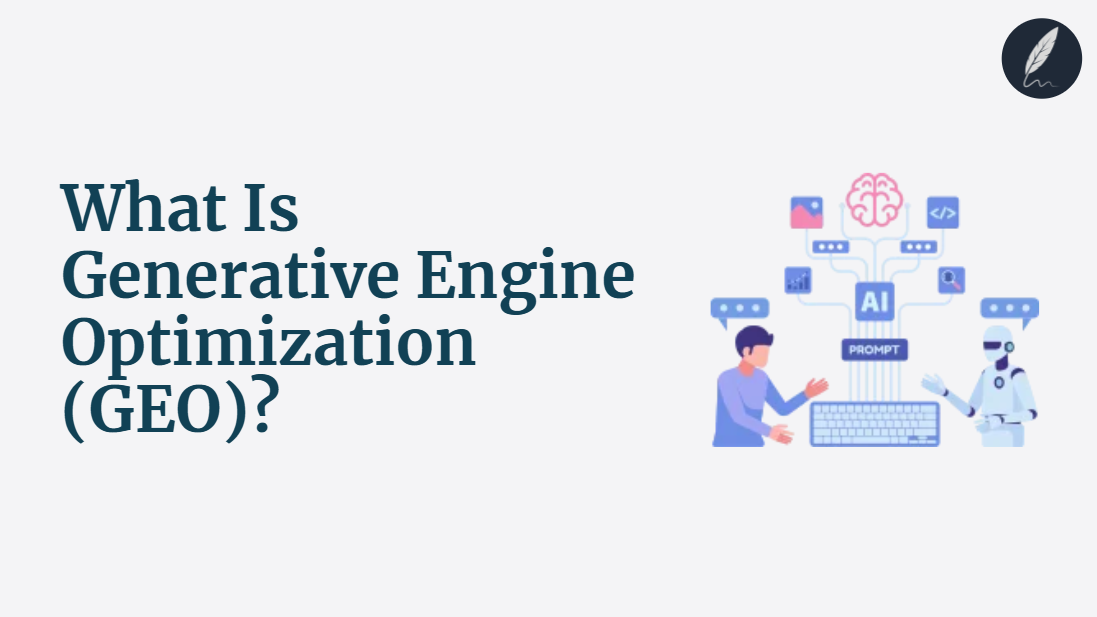
If you are wondering how to write content that gets cited by ChatGPT, you are not alone. The digital marketing world is moving rapidly. We are shifting from traditional search engine optimization to a new era of generative engine optimization (or a highly focused GEO strategy).
The Shift from Ranking to Retrieval
For decades, search engines ranked websites based on authority signals like backlinks, keywords, and domain history. Today, Large Language Models (LLMs) and answer engines use a completely different system.
They do not just rank content, they retrieve, synthesize, and cite it based on trust and extraction capability. Understanding this major shift is the very first step in successful AI citation optimization. Pairing GEO with a strong content cluster architecture amplifies your topical authority signals further.
Why ‘Helpful Content’ Isn’t Enough Anymore
You might think that writing high-quality, helpful content is the ultimate solution. While quality still matters deeply, it is no longer enough to guarantee visibility online.
Generic, well-written text often gets ignored by AI if the structure is too ambiguous for a machine to parse easily. To truly understand how to get cited by AI, your content must be clear, declarative, and structurally optimized for machines.
The Rapid Rise of Answer Engines
The way users seek information is changing faster than ever before. People are increasingly turning to answer engines rather than scrolling through pages of traditional blue links. Consider these major industry shifts:
- Plummeting Traditional Search Volume: According to recent research from Gartner, traditional search engine traffic is projected to shrink by 25% by 2026 as users switch to AI chatbots.
- Massive Growth in AI Search: Platforms like Perplexity AI are seeing explosive growth. In 2024, Perplexity reached over 22 million active users and processed more than 700 million search queries each month.
These facts and statistics clearly show why adapting your content for large language models is critical right now. If your brand wants to remain visible to modern consumers, mastering how to rank in AI overviews is no longer optional, it is absolutely essential for your future.
Core Thesis: AI Doesn’t Rank Content, It Trusts It
Thinking of AI citation optimization as just another keyword game is a mistake. Traditional search engines view content through the lens of authority signals, backlinks and domain age.
Generative AI, however, operates differently. It functions less like a librarian ranking books and more like a researcher verifying facts. To succeed, you must focus on authoritative content signals that build machine trust.
What “Trust” Means to a Large Language Model
When we talk about trustworthy content for AI, we are referring to how easily a model can extract, verify, and reproduce your information without hallucinating. An LLM doesn’t ‘read’ your page, it tokensizes it. If your content is ambiguous, the model essentially ‘loses confidence’ in the output, choosing to cite a clearer source instead. This is the essence of LLM-friendly content writing.
- Data Precision: AI models favor specific data points over vague generalizations. Writing “sales increased by 22%” is infinitely more “trustworthy” to a bot than “sales went up significantly.”
- Structural Citability: This refers to how easily a sentence can be lifted and attributed without losing context. Complex, dependent clauses often confuse retrieval systems.
- Unambiguous Clarity: Technical parsers fail when faced with nuance. Your content must meet the technical requirement of being unambiguous to be retrieved effectively.
- Fact-Based Selection: Unlike search engines that may rank popular but opinionated posts, generative engine optimization prioritizes content that is logically sound and factually verifiable.
The data backs this up. A landmark Princeton University study on Generative Engine Optimization (GEO) found that simply adding authoritative citations and statistics to content can increase visibility in AI answers by 40%.
This proves that AI doesn’t just want answers, it wants evidence.
It also rewards content that does not read like a thin rewrite of the existing SERP. If publish-stage originality is the weak point in your workflow, compare the best plagiarism checker for SEO writers.
Introducing “LLM-Native Writing”
If you are serious about mastering how to write content that gets cited by ChatGPT, you need a new approach tailored specifically for machines. We call this framework ‘LLM-Native Writing.’
It is a set of practices that makes your text structurally easy for a generative model to extract, summarize, and attribute. Earning ChatGPT content recommendations requires you to rethink how you construct everyday sentences.
Defining Content Craft for Robots
When humans read, they use context clues to figure out what a pronoun means or to untangle complex paragraphs. AI models, however, process text by breaking it into tokens and calculating relationships. To ensure your website is selected for AI search visibility, your content craft must follow these specific LLM-native rules:
- Declarative Structure: Write using straightforward Subject-Verb-Object sentences. Complex, narrative storytelling might engage humans, but it confuses AI retrieval systems.
- The No-Pronoun Rule: Avoid words like ‘it,’ ‘they,’ or ‘this’ in your most important definitions. If a single sentence cannot stand alone without surrounding context, an AI model is less likely to pull it as a trusted citation.
- Explicit Naming: Repeat your brand or entity names frequently. Instead of saying ‘the tool offers features,’ write ‘Orwellix offers features.’ This strengthens the association between your brand and the topic inside the machine’s memory.
- Statistical Precision: Always use exact numbers and name your sources directly in the sentence rather than saying ‘many studies show.’ Specificity builds machine trust.
Scientific research strongly supports this structural shift. A Nature study on LLM information extraction found that AI models extract facts best from simple, single-value sentences, but struggle significantly with complex constructions.
Furthermore, research on AI coreference resolution demonstrates that explicitly naming entities, rather than relying on pronouns, markedly improves a model’s ability to track and cite the correct source. Writing clearly and explicitly is the secret to appearing in AI answers consistently.
Structural Tactics for AI Retrieval
Now that you understand the rules of LLM-native writing, it is time to look at the overall shape of your article. Building a strong content structure for AI search is about making it effortless for the machine to find your key points.
When learning how to write for AI summarization, the visual layout of your page matters just as much as the words you choose.
Architecting Content for Summarization
Generative engines look for specific structural clues to extract information accurately. If you want to know how to optimize for Perplexity or Google’s AI Overviews, you must architect your paragraphs, lists, and tables deliberately to remove any guesswork for the AI bots.
- The Inverted Pyramid Paragraph: Start every paragraph with a complete, standalone claim in the very first sentence. The remaining sentences should simply provide the supporting details.
- Self-Contained Definitions: When introducing a new term, use a clean “What is [Topic]?” format that does not rely on the surrounding context.
- Logical List Structures: Use semantically rich headers and introductory sentences right before your bullet points. This tells the extraction model exactly how the listed items relate to one another.
- Clear Table and Data Formatting: Organize complex relationships using simple, well-labeled structures. This helps AI parse comparisons rapidly with minimal errors.
Why are these structures so critical? The difference in machine comprehension is staggering. A comprehensive NLP study on LLM extraction revealed that state-of-the-art models extract facts from structured data (like tables and lists) with over 95% accuracy.
In contrast, pulling the exact same facts from unstructured, dense narrative text drops their accuracy down to 80% or lower. Structuring your data carefully directly strengthens your AI overview content strategy.
Practical Strategy: Using Orwellix to Capture AI Traffic
To master how to write content cited by ChatGPT, you must shift your focus from short-tail keywords to long-form natural language queries. The era of typing “running shoes” is fading, the era of asking “what are the best cushioned running shoes for flat feet under $100?” has arrived. This shift is substantiated by data: Gartner predicts that traditional search engine traffic will drop by 25% by 2026 as users increasingly rely on chatbots for direct answers.
Review: Generating AI-Ready Questions with Orwellix
Anticipating the exact questions AI users ask can be difficult with standard SEO tools. This is where our free Conversational Keyword Research Tool becomes an essential asset for your GEO strategy. Unlike traditional planners that focus on search volume, this free tool helps you identify the specific question strings that trigger AI search visibility.
- Input Topic Details: Enter your core subject (e.g., “SaaS Marketing”).
- Select Target Audience: Choose precisely who you are writing for from the dropdown menu, such as “Business Owners,” “Developers,” or “Marketers.”
- Select Industry: Refine the context by choosing the sector, like “SaaS/Software,” “Finance,” or “Health & Fitness.”
- Generate: Click the “Generate Conversational Keywords” button to produce a list of natural language questions tailored to that specific persona.
By answering these specific questions in your content, you align perfectly with the user intent of modern answer engines. With platforms like Perplexity AI now processing over 700 million queries per month, optimizing for these conversational patterns is the most practical way to secure your place in the future of search.

Write smarter with Orwellix
The Orwellix AI Capabilities that helps you craft clearer, more effective content.
Conclusion
In conclusion, thriving in the modern search landscape requires mastering how to write content that gets cited by ChatGPT and AI overviews. We have explored the shift from traditional ranking to AI retrieval, highlighting that machines prioritize trust, factual precision, and strict structure.
By adopting LLM-native writing, using declarative sentences, explicit naming, and avoiding ambiguous pronouns, you make it effortless for bots to extract your facts reliably. Furthermore, architecting your information into clear lists, tables, and inverted pyramids guarantees rapid, accurate summarization.
Together, these strategies construct a powerful framework for Generative Engine Optimization (GEO). The broader implication is clear: as traditional search volume continues to decline, your digital visibility depends entirely on your ability to feed AI engines structurally perfect, citable data.
To successfully implement this shift, having the right insights is essential. If you produce content as a freelancer, pairing this strategy with the best AI writing tool for freelance writers ensures your workflow stays efficient from research through final polish. Exploring the Orwellix Conversational Keyword Research Tool can help you seamlessly uncover the natural language queries your audience is actively asking answer engines. As search platforms evolve, restructuring your content strategy today will remain crucial, steering your brand toward long-term authority and guaranteed visibility in the AI-driven future.
Frequently Asked Questions (FAQs)
1. How is Generative Engine Optimization (GEO) different from traditional SEO?
Traditional SEO focuses on optimizing for keywords and acquiring backlinks to rank on search engine results pages. In contrast, GEO optimizes content structure, clarity, and factual precision to help AI models retrieve and cite your information directly in their generated answers.
2. How can I make my existing blog posts more LLM-friendly?
Start by restructuring your content using the inverted pyramid method, placing clear claims at the beginning of your paragraphs. Replace ambiguous pronouns with explicit entity names, and organize complex data points into simple lists or tables to improve machine extraction accuracy.
3. Why does AI prefer specific statistics over general statements?
Large language models calculate relationships between tokens to verify facts and reduce hallucinations. Specific numbers provide verifiable, grounded data points that AI systems inherently trust more than vague or contextual phrases like saying sales grew significantly.
4. Will optimizing for AI negatively affect my human readers?
Not at all, preparing your content for AI actually benefits human readers by making your writing more direct, logically organized, and easier to skim. Structured formats like clear headings, defined lists, and straightforward sentences improve readability and comprehension for everyone.
5. What does the “no-pronoun rule” mean in LLM-native writing?
The no-pronoun rule advises against using words like “it,” “they,” or “this” when defining important concepts. Because AI models extract individual facts, using explicit names ensures the model retains the correct context even when the sentence is pulled out of a larger paragraph.
Try Orwellix Free for 7 Days
Experience Orwellix AI Agent's capabilites with risk-free trial. Full access to all features for 7 days. Credit card required to start, you won't be charged until the trial ends.
Start Your Free Trial