01Ten categories, three kinds of tell
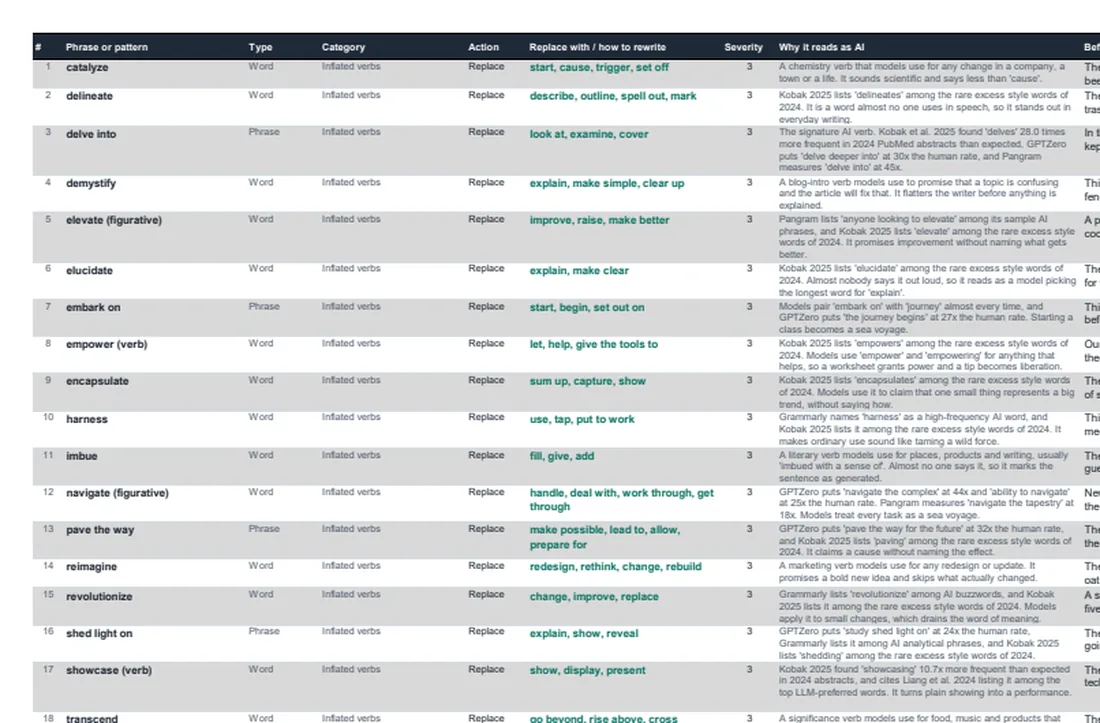
Vocabulary (inflated verbs, adjectives, stock nouns and metaphors, significance frames, openers and closers, transitions, marketing phrases), structure (triads, not-just-but, the one-line punch, rhetorical questions) and formatting (em dashes, bullet lists, bold, headers, emoji, chatbot leaks).
02Why it reads as AI, with the number
"Delve" is 28 times more frequent than expected in 2024 research abstracts. "Play a pivotal role" appears 49 times more often in AI text than human text. Em dashes, 10 times. Bullet lists, 9 times. Every row that has a measured figure gives it and names the study.
03Cut, replace or rewrite
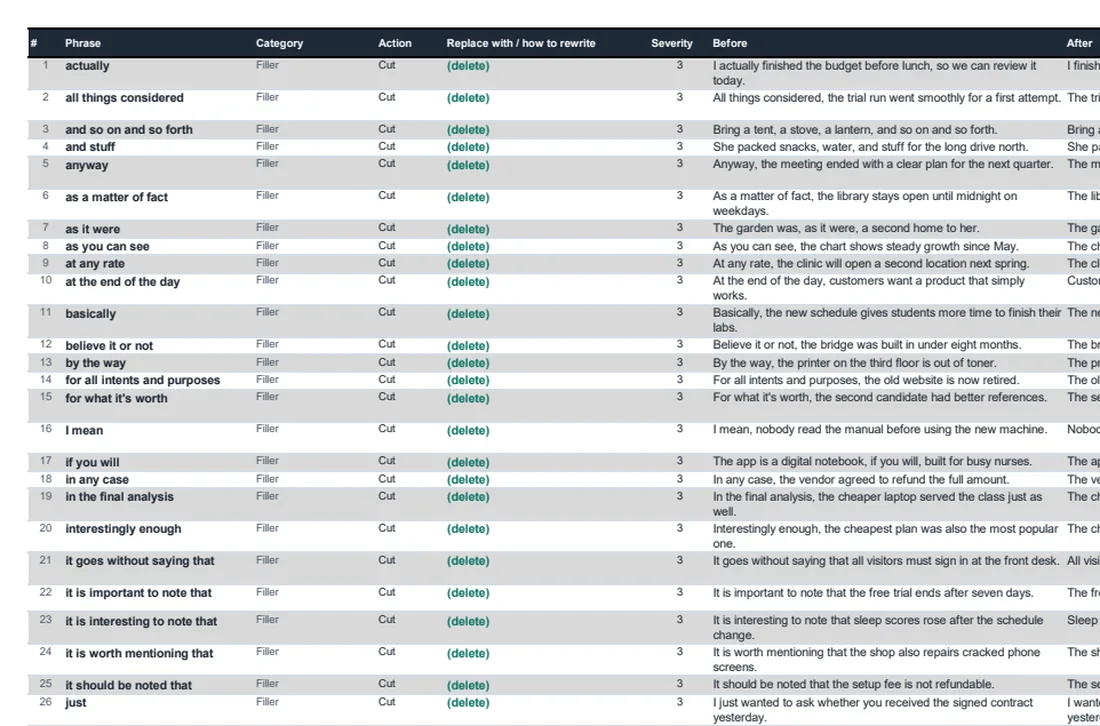
Each tell has an action. Replace gives plain words a grade 8 reader knows. Rewrite tells you how to restructure ("say the one thing that is true, cut the setup").
04A real sentence pair on every row
Not "use fewer words". An actual before and after across work, school, product, health, cooking, travel and money, and the after is concrete, never just the word deleted.
05The Find and Replace tab
Whole-word patterns for Word and regex for Google Docs and editors, plus patterns that find the structural tells: em dashes, bold, headers, bullets, triads, not-just-but, cheerful openers, placeholder brackets.
06The prompt block
A paste-in instruction built from every severity-3 tell, a short version that fits a custom-instructions field, and one for Orwellix Agent Mode. Stop the tells before the draft exists and you edit less.